



 Update
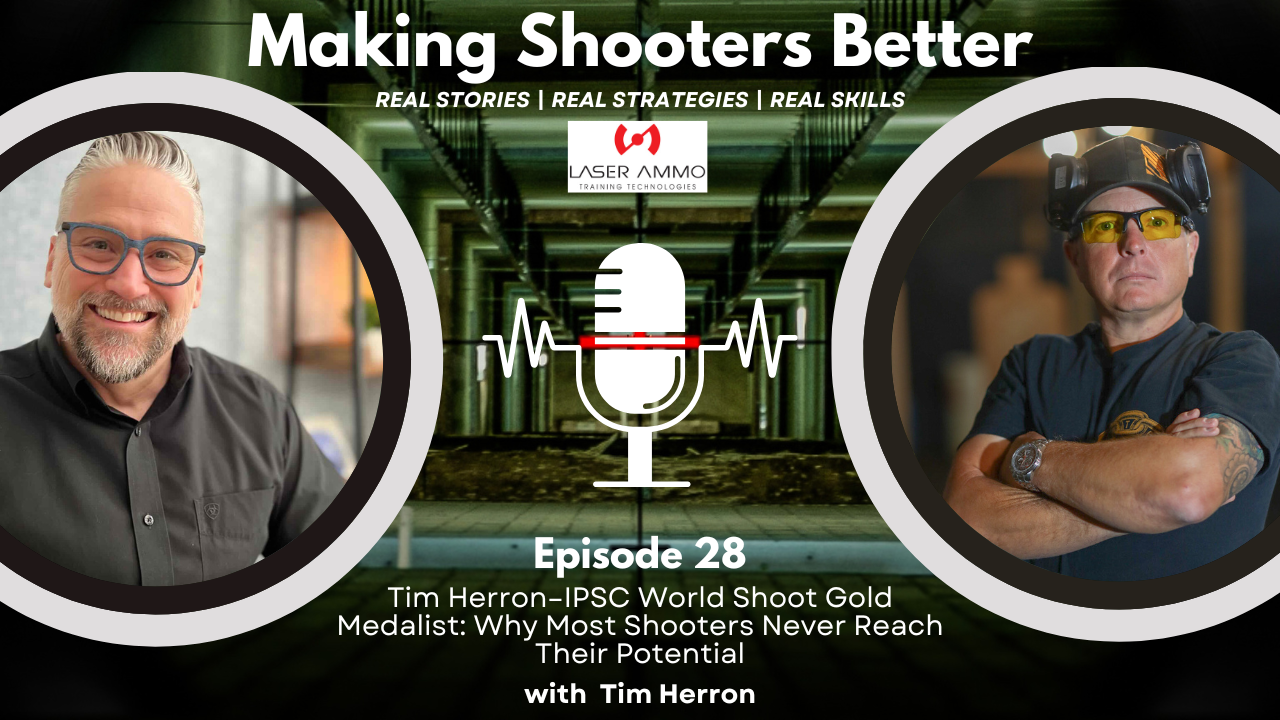
Most shooters want to become faster, more accurate, and more consistent. But according to IPSC World Shoot Gold Medalist and multi-division USPSA Grand Master Tim Herron, the real key to improvement often lives beneath the surface.
In this episode of Making Shooters Better, Tim joins Terry Vaughan for a thoughtful conversation about emotional control, pressure, training structure, and why so many shooters reach a plateau without realizing they trained themselves into it.
Competition Reveals More Than Shooting Skill
Tim explains that competition shooting is not just a test of speed or accuracy. It is also a public test of emotional regulation.
When the timer starts, shooters must manage pressure, solve problems, and execute skills while being watched. That pressure can expose habits that may not show up during casual range time.
Why Pressure Matters
Pressure is part of performance. Tim points out that elite shooters are not free from nerves. Instead, they learn to work with those feelings and build routines that help them perform consistently.
- They prepare with repeatable pre-stage routines.
- They learn to accept pressure instead of avoiding it.
- They use mistakes as feedback instead of emotional setbacks.
- They stay focused on process rather than outcome.
Practice and Training Are Not the Same
One of the strongest takeaways from the conversation is Tim’s distinction between practice and training.
Practice often confirms skills a shooter already has. Training, on the other hand, pushes into areas that are uncomfortable, uncertain, or underdeveloped.
How Shooters Accidentally Plateau
Tim explains that many shooters repeat what already feels good. They run familiar drills, shoot comfortable standards, and leave the range feeling successful without actually building new capability.
Growth requires a different approach. Shooters need to identify weak points, create pressure, and be willing to fail in a controlled training environment.
Smarter training may include:
- Setting a specific goal before the session begins
- Using a timer to create honest feedback
- Scoring both speed and accuracy
- Limiting repeat attempts to create match-like pressure
- Reviewing mistakes without turning them into frustration
Randomization Builds Better Problem-Solving
Tim also highlights the importance of randomization. Instead of repeating the same drill the same way, he encourages shooters to change the order, direction, target sequence, or movement pattern.
This keeps the brain engaged and helps prevent training from becoming choreography.
Why Randomization Helps
In a match, defensive situation, or any pressure-based environment, things rarely unfold exactly as expected. Randomized training helps shooters adapt, think, and apply skills in different ways.
- Shoot the same target array in a different order.
- Start from a new position.
- Reverse the direction of movement.
- Change the target priority.
- Work the same skill from multiple angles.
Dry Fire Supports Consistent Skill Development
Tim and Terry also discuss the value of dry fire as part of a responsible training plan. Dry fire gives shooters more opportunities to work on mechanics, visual processing, draws, reloads, and movement without needing to be at the range.
As always, dry fire should be done safely, with proper safety checks, and as a supplement to live fire rather than a replacement for it.
Dry Fire Can Help Shooters Work On:
- Building a consistent grip
- Improving draw mechanics
- Refining reloads
- Practicing visual transitions
- Chunking complex skills into smaller pieces
Learning From Mistakes Without Spiraling
A major theme in this episode is how shooters respond to mistakes. Tim explains that one mistake does not have to become three more. The key is learning to notice the error, diagnose it, and return to the process.
That mindset helps shooters stay productive during practice and more composed during competition.
A Better Way to Handle Errors
- Pause long enough to recognize what happened.
- Avoid turning the mistake into negative self-talk.
- Look for the cause, such as grip, movement, gear placement, or focus.
- Make a simple correction.
- Return to the drill with a clear goal.
What Competition Can Teach Defensive Shooters
Tim and Terry also discuss the connection between competition and defensive training. Competition is not the same as a defensive encounter, but it does give shooters a structured way to perform under pressure.
That experience can be valuable for anyone who wants to better understand how they respond when time, accuracy, movement, and decision-making are all being tested.
Watch the Full Conversation
This episode is a practical masterclass on the mental side of shooting performance. Tim Herron shares valuable insight for competitive shooters, instructors, concealed carriers, and anyone working to build safer, more consistent skill under pressure.
Watch the full conversation to hear Tim explain how he structures training, uses failure productively, and helps shooters move beyond plateaus. Subscribe to Laser Ammo’s channel for more episodes of Making Shooters Better and follow Tim for classes, coaching, and training resources.
Follow Tim Herron here:
- Facebook: https://www.facebook.com/TimHerronShooting
- Instagram: https://www.instagram.com/timherronshooting
- Classes: https://www.timherronshooting.com/classes
Listen to More Episodes
You can listen to Making Shooters Better on your favorite podcast platform. Follow the show here:
- Buzzsprout: https://www.buzzsprout.com/2532363/follow
- Amazon Music https://music.amazon.com/podcasts/8156b69d-5ad9-46e9-9a4d-2baff1fbc9ef/making-shooters-better
- Apple Podcasts: https://podcasts.apple.com/podcast/id1849466402
- Spotify: https://open.spotify.com/show/5EhHThJEeV5QZ0QQn5n5CF
- Podcast Index: https://podcastindex.org/podcast/7559749
- Overcast: https://overcast.fm/itunes1849466402
- Castro: https://castro.fm/itunes/1849466402
- Podchaser: https://www.podchaser.com/podcasts/making-shooters-better-6264190
- Goodpods: https://www.goodpods.com/podcasts-aid/1849466402
- TrueFans: https://truefans.fm/65cb6a8a-c2eb-524e-b742-257cbe7bcfce
- Castbox: https://castbox.fm/vic/1849466402
- Podcast Addict: https://podcastaddict.com/podcast/making-shooters-better/6158896
- iHeartRadio: https://www.iheart.com/podcast/1333-making-shooters-better-303769503/
- Pandora: https://www.pandora.com/podcast
- TuneIn: https://tunein.com/podcasts/