



 Update
Getting Faster Starts With Understanding Where Time Is Lost
Ask a shooter how to become faster and one of the first answers might be simple: shoot faster.
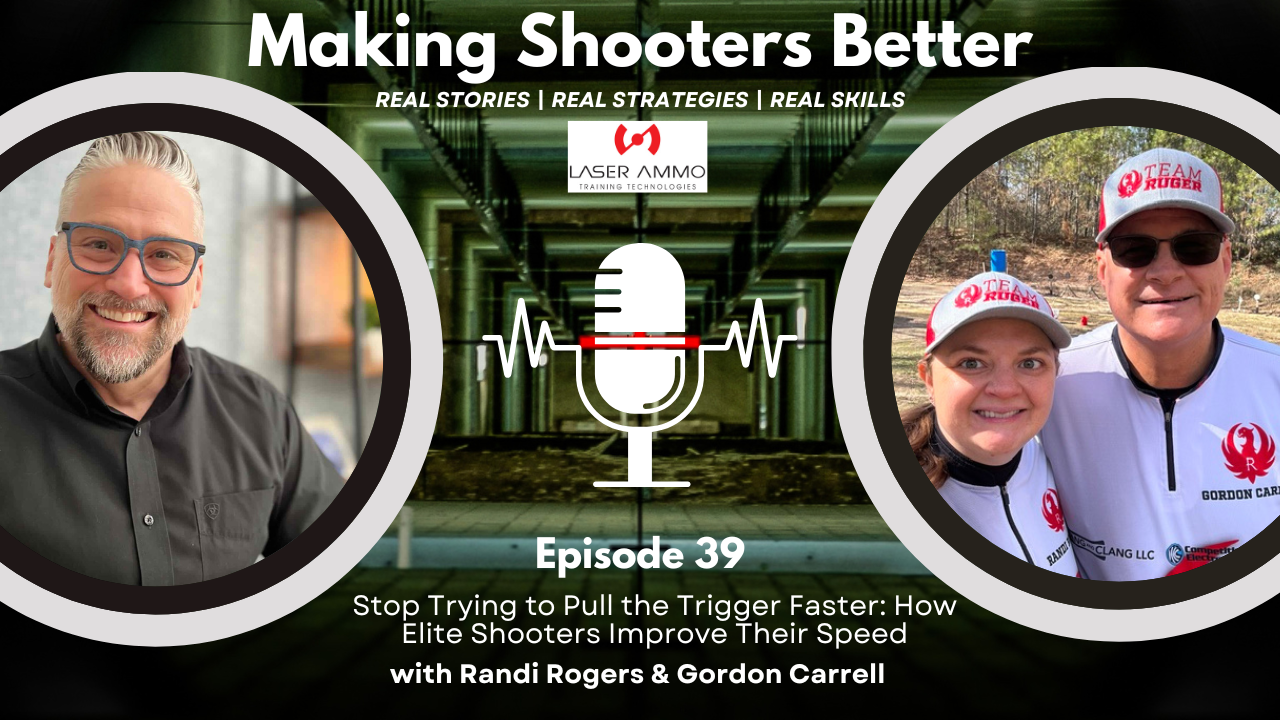
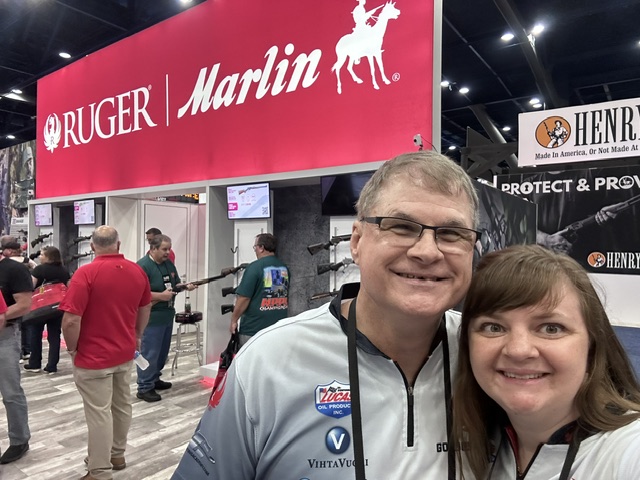
But elite competitive shooters Randi Rogers and Gordon Carrell have spent years learning why meaningful improvements in speed are rarely that simple.
In this episode of Making Shooters Better, Randi and Gordon join Terry Vaughan to discuss how shooters can identify inefficiencies, improve movement, make practice more productive, and develop the mental skills needed to perform when it counts.
Their perspectives are especially interesting because they reached elite competitive shooting through remarkably different paths.
Two Very Different Paths Into Competitive Shooting
Randi started shooting at only 11 years old while spending time with her grandparents, who were competitive Cowboy Action shooters. Instead of sitting in the truck while they competed, she joined them on the range.
In Cowboy Action Shooting, competitors adopt an alias. Randi became “Holy Terror,” fitting right in alongside her grandparents, Evil Roy and Wicked Felina.

Shooting soon became a normal part of life. Over the following decades, Randi built an extraordinary competitive career, accumulating more than 85 world and national titles across nine shooting disciplines.
Gordon’s introduction to competitive handgun shooting came much later.
He had spent years participating in athletics including football, pole vaulting, rock climbing, hiking, and hunting. When he entered competitive handgun shooting in his mid-thirties, many of the lessons from those activities began transferring into his new sport.
Footwork, body control, planning, patience, and the ability to stay mentally prepared between moments of competition all became useful skills.
Those different backgrounds also shaped how Randi and Gordon approach learning today.
Speed Is More Than Trigger Speed
One of the biggest misconceptions Gordon sees is the belief that becoming faster means learning to pull the trigger faster.
Trigger speed can matter, but there are many other places where time disappears.
A shooter may lose time through:
- Unnecessary movement
- Slow or inefficient transitions
- Hesitation between actions
- Poor positioning when entering or leaving a shooting position
- Waiting too long to begin moving after the start signal
- Lowering the firearm unnecessarily during movement
- Changing body position before taking the next shot
Gordon describes the goal as eliminating the pauses where neither the shooter nor the firearm is accomplishing something useful.
Efficiency becomes speed.
Instead of trying to make every individual action dramatically faster, shooters can look for small amounts of wasted time throughout an entire performance.
Eliminate Mistakes Before Chasing Fractions of a Second
Randi adds another important element to the speed conversation: stop giving time away through avoidable mistakes.
For developing shooters especially, a missed target, forgotten target, poorly planned reload, or stage-plan mistake can cost far more than the fractions of a second gained by trying to move or shoot faster.
That makes observation an important training tool.
Randi grew up watching her grandfather shoot while he watched and coached her. She believes those years of observation helped develop her ability to see a movement and reproduce it herself.
Watching other shooters can reveal different ways to approach a problem, and mentally rehearsing those approaches gives the shooter another opportunity to learn without simply adding more rounds to a practice session.
Build an Athletic Position You Can Move From
Movement also plays a major role in efficiency.
Gordon’s athletic background helped him recognize that the body needs to be prepared to move. A shooter who arrives at a position and then has to completely change posture before engaging a target has introduced another unnecessary step.
An athletic position can help a shooter remain balanced, manage the firearm effectively, and transition into the next movement without first having to reset the body.
As with any firearms skill, the goal is not to imitate someone else’s position simply because it looks fast. Shooters have different physical abilities and limitations. The objective is to find a safe, effective position that supports control and efficient movement for the individual shooter.
Stop Practicing Only What You Already Do Well
One of Gordon’s strongest training principles is also one of the most uncomfortable: stop spending most of your practice time doing the things you already know how to do.
Successful repetitions feel productive. They are satisfying, and they reinforce confidence.
But constantly repeating a comfortable skill may do very little to expand a shooter’s capabilities.
Gordon and Randi instead go to the range with a plan for what needs work.
Practice Outside Your Existing Comfort Zone
Gordon encourages shooters to deliberately explore the edge of their current ability during practice.
That means a failed repetition is not automatically a bad repetition.
The important question is why it failed.
After a repetition, a shooter can ask:
- What happened?
- What did I see?
- Was my grip what I expected?
- Was my movement efficient?
- Where did hesitation appear?
- What will I change on the next repetition?
This distinction is critical because, as Gordon explains, practice makes permanent. Repeating an inefficient technique does not magically transform it into an efficient one. It can simply make the existing habit more durable.
Matches Are Not a Substitute for Practice
Randi also cautions against relying entirely on matches as training.
Matches provide valuable experience and expose shooters to problems under pressure, but they do not necessarily provide an opportunity to correct those problems.
If a shooter struggles with a particular target or movement during a match and never returns to investigate what happened, the weakness remains.
Instead, match performance can help create the next practice plan.
Identify what caused difficulty, recreate the relevant skill in a safe training environment, and deliberately work on improving it.
Measure Performance Instead of Guessing
Gordon brings an especially analytical approach to shooting development.
For him, improvement starts with knowing what a shooter can currently do.
That means establishing baselines.
A baseline could include measurements such as:
- Draw time
- First-shot time
- Split times
- Transition times
- Accuracy
- Movement into and out of positions
Once those numbers exist, a shooter has something meaningful to compare against future performance.
Data Can Reveal Problems That Feel Invisible
Randi experienced Gordon’s analytical approach firsthand while working on Steel Challenge.
Rather than simply recording her overall stage time, Gordon broke the performance into individual pieces. They could then compare those components and identify exactly where fractions of a second were being lost.
Instead of saying, “I need to shoot this stage faster,” Randi could identify a specific transition or draw that offered an opportunity for improvement.
The process required patience, but the information gave her a much clearer training target. Randi went on to win the ladies’ title that year.
The lesson applies well beyond competition: measurement turns a vague goal into something a shooter can actually evaluate.
Use Video as Another Training Tool
Video adds another layer of useful information.
Something may feel correct while it is happening but look completely different when reviewed afterward.
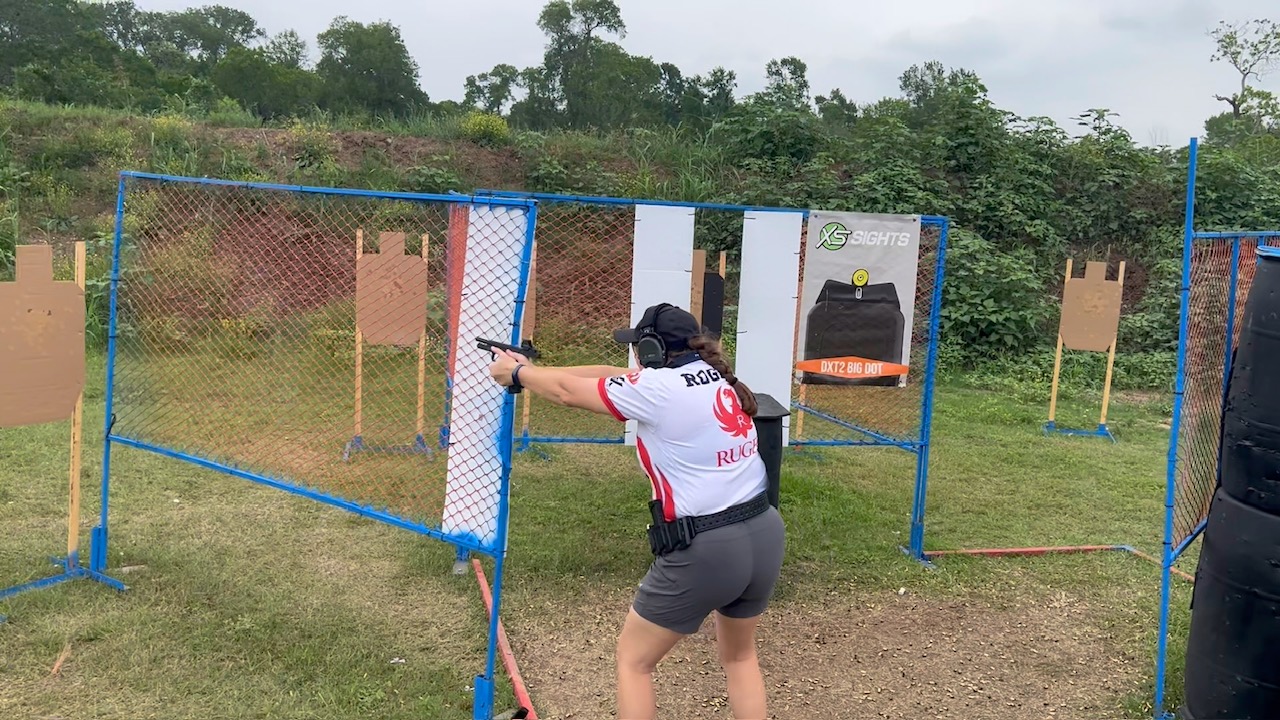
Randi and Gordon use video to study details such as foot placement, firearm position during movement, and preparation when approaching a shooting position.
For newer shooters, recording a safe practice session can provide an opportunity to slow things down and study what actually happened rather than relying entirely on memory.
Video is especially valuable when combined with measurable performance. The timer can show where time was lost, while the video may help explain why.
The Mental Side of Performance
Randi and Gordon also approach match-day mental performance differently.
Gordon shared an important lesson he learned from legendary competitive shooter Rob Leatham: maintaining maximum mental intensity throughout an entire match can be exhausting.
Instead, develop the plan, relax when appropriate, and then bring the necessary focus back when it is time to perform.
Gordon also works to reinterpret nervousness. Rather than treating an elevated heart rate and excitement as evidence that something is wrong, he views those sensations as his body preparing to perform.
Randi Keeps Her Cue Simple
Randi uses a much simpler internal reminder when she reaches the line:
“Sights. Sights. Sights.”
The purpose is not to consciously manage every individual movement. It gives her mind one relevant point of focus and helps allow the skills developed through training to take over.
Both approaches lead toward the same goal: prepare deliberately, then avoid interfering with trained performance by trying to consciously control every movement.
Compete Against Your Own Capabilities
One of the most useful perspectives from the conversation is that performance should not always be judged by where a shooter finishes compared with everyone else.
Gordon recalls losing a national title by only a fraction of a second and still being pleased with his performance because he believed he had consistently performed near his known ability.
Conversely, winning does not automatically mean someone performed well.
If you know what you are capable of doing, you have a more useful standard.
That changes the question from “Did I beat someone else?” to “How closely did my performance match what I know I can do?”
When Your Training Partner Is Also Your Spouse
Of course, there is another dimension to Randi and Gordon’s training relationship: they are married.
Both are competitive, driven, and willing to analyze performance, which can make coaching each other interesting.
Over the years, they have developed a simple question that works remarkably well:
“Do you want me to listen, or do you want me to offer advice?”
Sometimes a shooter wants help solving a problem. Other times, they already have a plan and simply need to talk through what happened.
Knowing the difference can make someone a much better training partner—and probably makes the drive home from the range more enjoyable too.
A Practical Blueprint for Becoming a Better Shooter
Randi and Gordon may approach shooting from different perspectives, but many of their lessons lead to the same place.
- Make training a consistent part of your schedule.
- Spend time working on weaknesses, not only strengths.
- Establish measurable performance baselines.
- Analyze each repetition instead of mindlessly accumulating repetitions.
- Use video to see what you cannot feel.
- Watch other shooters and learn from their approaches.
- Look for unnecessary movement and hesitation.
- Use matches to identify what should be addressed in future practice.
- Measure improvement against your own known capabilities.
For dry-fire training, maintain the same emphasis on safe, responsible firearm handling. Dry fire provides additional opportunities to practice and analyze skills, but it is not a substitute for appropriate live-fire training.
Watch the Full Conversation
Randi Rogers and Gordon Carrell bring two very different perspectives to the same challenge: becoming more capable, efficient, and consistent shooters. Their conversation goes far beyond raw speed, exploring how movement, observation, mental preparation, measurement, and thoughtful practice can shape long-term improvement.
Watch the full episode embedded below to hear the stories behind their training philosophies, including Randi’s journey from “Holy Terror” to more than 85 world and national titles, Gordon’s data-driven approach to performance, and how two highly competitive shooters manage to train, compete, coach, and stay married.
Follow Randi Rogers on Facebook and through the Ruger Shooting Team, and follow Gordon Carrell through GLC Shooting Academy, Facebook, and the Ruger Shooting Team.
Subscribe to Laser Ammo for more episodes of Making Shooters Better and more conversations focused on practical skill development, thoughtful training, and responsible firearms practice.
Listen to More Episodes
You can listen to Making Shooters Better on your favorite podcast platform. Follow the show here:
- Buzzsprout: https://www.buzzsprout.com/2532363/follow
- Amazon Music https://music.amazon.com/podcasts/8156b69d-5ad9-46e9-9a4d-2baff1fbc9ef/making-shooters-better
- Apple Podcasts: https://podcasts.apple.com/podcast/id1849466402
- Spotify: https://open.spotify.com/show/5EhHThJEeV5QZ0QQn5n5CF
- Podcast Index: https://podcastindex.org/podcast/7559749
- Overcast: https://overcast.fm/itunes1849466402
- Castro: https://castro.fm/itunes/1849466402
- Podchaser: https://www.podchaser.com/podcasts/making-shooters-better-6264190
- Goodpods: https://www.goodpods.com/podcasts-aid/1849466402
- TrueFans: https://truefans.fm/65cb6a8a-c2eb-524e-b742-257cbe7bcfce
- Castbox: https://castbox.fm/vic/1849466402
- Podcast Addict: https://podcastaddict.com/podcast/making-shooters-better/6158896
- iHeartRadio: https://www.iheart.com/podcast/1333-making-shooters-better-303769503/
- Pandora: https://www.pandora.com/podcast
- TuneIn: https://tunein.com/podcasts/