



 Update
Recording note: A technical issue affected the video recording partway through this episode. The audio was unaffected, so we placed a still photo where the video interruption occured, so you can still listen to the full conversation on YouTube embedded below, on YT or on your preferred podcast streaming platform.
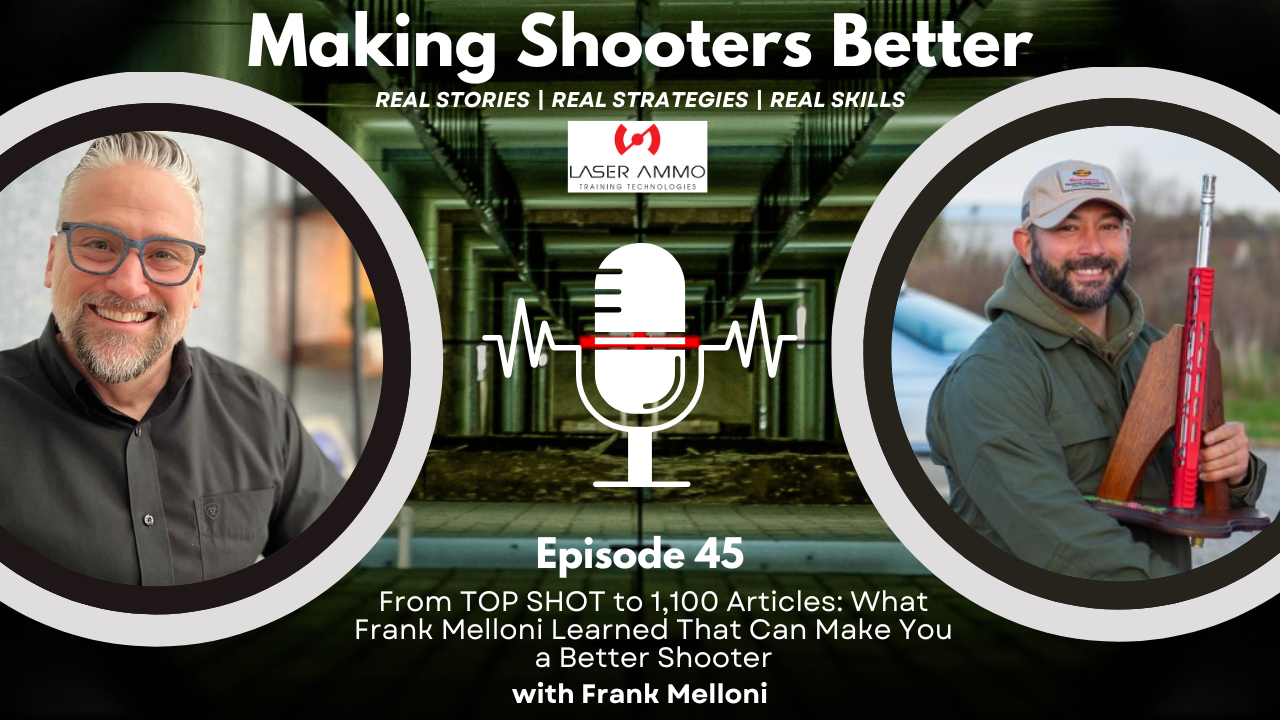
Getting better at shooting is not always about adding something new. Sometimes the biggest improvement comes from identifying what is actually holding you back.
That idea runs throughout Terry Vaughan’s conversation with Frank Melloni, a fellow Top Shot Season 4 competitor and the president of Renaissance Firearms Instruction. Frank’s background spans firearms instruction, competition, precision rifle shooting, handloading, hunting, product testing, and more than 1,100 published firearms articles.
That variety of experience has given him an unusually broad view of shooting performance. More importantly, it has reinforced a lesson that applies at almost every skill level: productive training begins with an honest assessment of what needs improvement.
The Difference Between Shooting More and Training Better
Frank started as a largely self-taught shooter. That gave him the opportunity to discover fundamentals through experience, but it also showed him one of the limitations of learning entirely on your own.
Self-directed practice can help a shooter develop awareness, problem-solving skills, and confidence. It can also reinforce habits that feel natural without necessarily being effective.
That is one reason Frank eventually began seeking instruction from other knowledgeable shooters and continues to encourage his own students to do the same.
Humility Keeps the Learning Process Moving
A recurring theme in the conversation is the importance of remaining open to new information.
Frank does not believe one instructor has every answer. Different teachers explain concepts differently, notice different problems, and bring experience from different shooting disciplines.
For shooters, that means progress often comes from being willing to:
- Ask questions even when you already have experience.
- Learn from instructors with different backgrounds.
- Revisit fundamental skills instead of assuming they have been mastered.
- Test different approaches and measure which one works best.
- Accept that a technique may need to change as equipment, goals, or circumstances change.
Frank’s own experience with handgun shooting illustrates that approach. Handguns were one of the more difficult disciplines for him to develop, so he sought out instruction, experimented with different techniques, and learned why certain approaches failed as well as why others succeeded.
That process ultimately helped shape how he teaches today.
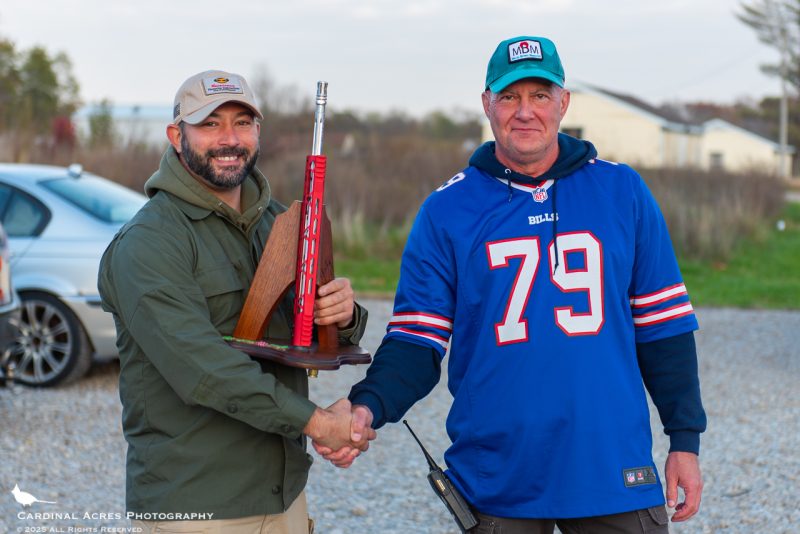
Competition Makes Weaknesses Harder to Ignore
A relaxed range session gives you time to prepare for every shot. Competition adds a different set of demands.
A timer, other shooters watching, unfamiliar stages, and the knowledge that you only get one attempt can quickly expose weaknesses that are easy to overlook during slower practice.
Frank points out that this type of pressure does not replicate a defensive encounter, but it can teach shooters useful lessons about how their skills hold together when speed and performance expectations increase.
Competition can reveal issues with:
- Visual discipline and sight use.
- Trigger control when shooting faster.
- Transitions between targets.
- Position building and stability.
- Decision-making under time pressure.
- The ability to maintain fundamentals while attention is divided.
It also reinforces the connection between deliberate fundamental practice and faster practical shooting. Problems that appear during slow fire do not simply disappear when the pace increases.
Is the Problem Really the Equipment?
New equipment can absolutely make a difference. A firearm that fits the shooter well, a dependable optic, suitable ammunition, or equipment designed for a specific application can remove unnecessary obstacles.
But equipment also creates an easy explanation when performance is not improving.
Frank has spent years testing firearms and related products, so he has had plenty of opportunities to compare equipment objectively. His approach is to look for measurable differences rather than assuming that something newer or more expensive must produce a meaningful improvement.
Questions worth asking include:
- Did the equipment produce a measurable improvement?
- Is the existing equipment actually limiting the shooter?
- Is the improvement large enough to matter for the intended use?
- Would the same money be better invested in training or practice?
Once your equipment is reliable and appropriate for your needs, another purchase may provide less benefit than spending time developing the person using it.
Removing Variables Makes Problems Easier to Diagnose
Frank’s experience with precision shooting and handloading has reinforced another useful training principle: remove unnecessary variables whenever possible.
Accurate ammunition, repeatable equipment, and a stable setup make it easier to determine whether an inconsistent result is coming from the firearm, ammunition, environment, or shooter.
This does not mean everyone needs custom-loaded ammunition or specialized precision equipment. The broader lesson is to create enough consistency that you can identify what needs work.
The same concept applies to a handgun drill. If the distance, target, starting position, and scoring method constantly change, it becomes difficult to know whether you are actually improving.
Measure the Skill You Are Trying to Improve
Simply firing more rounds does not guarantee progress.
Before beginning a practice session, identify a specific skill and decide how you are going to evaluate it. Depending on the goal, that measurement might involve accuracy, time, consistency, group size, transitions, or another clearly defined standard.
This creates a simple training loop:
- Identify a specific skill.
- Establish a repeatable drill or standard.
- Record the result.
- Make one deliberate adjustment.
- Repeat the drill.
- Compare the results over time.
That process turns practice into useful feedback instead of relying on how a session happened to feel.
Train More Frequently Instead of Simply Training Longer
Another practical takeaway from Frank’s experience is that shorter, more frequent practice can be more useful than putting all of your training into one long monthly range trip.
Fatigue, declining concentration, and simple boredom can reduce the quality of practice as a long session continues. Returning to a skill more frequently gives you repeated opportunities to reinforce what you are learning.
That is also where responsible dry-fire practice can help.
Dry fire is not a replacement for live-fire training. Live fire provides feedback that dry practice cannot duplicate, including recoil management and the behavior of the firearm during actual firing. However, dry fire can provide additional opportunities to safely work on specific skills between range visits when appropriate safety procedures are followed.
Depending on your training goals, those sessions may help you reinforce areas such as presentation, visual focus, trigger control, movement patterns, and other fundamentals without consuming ammunition.
The objective is not simply to accumulate repetitions. Every repetition should support the skill you have decided to improve.
Keep the Fun in Shooting
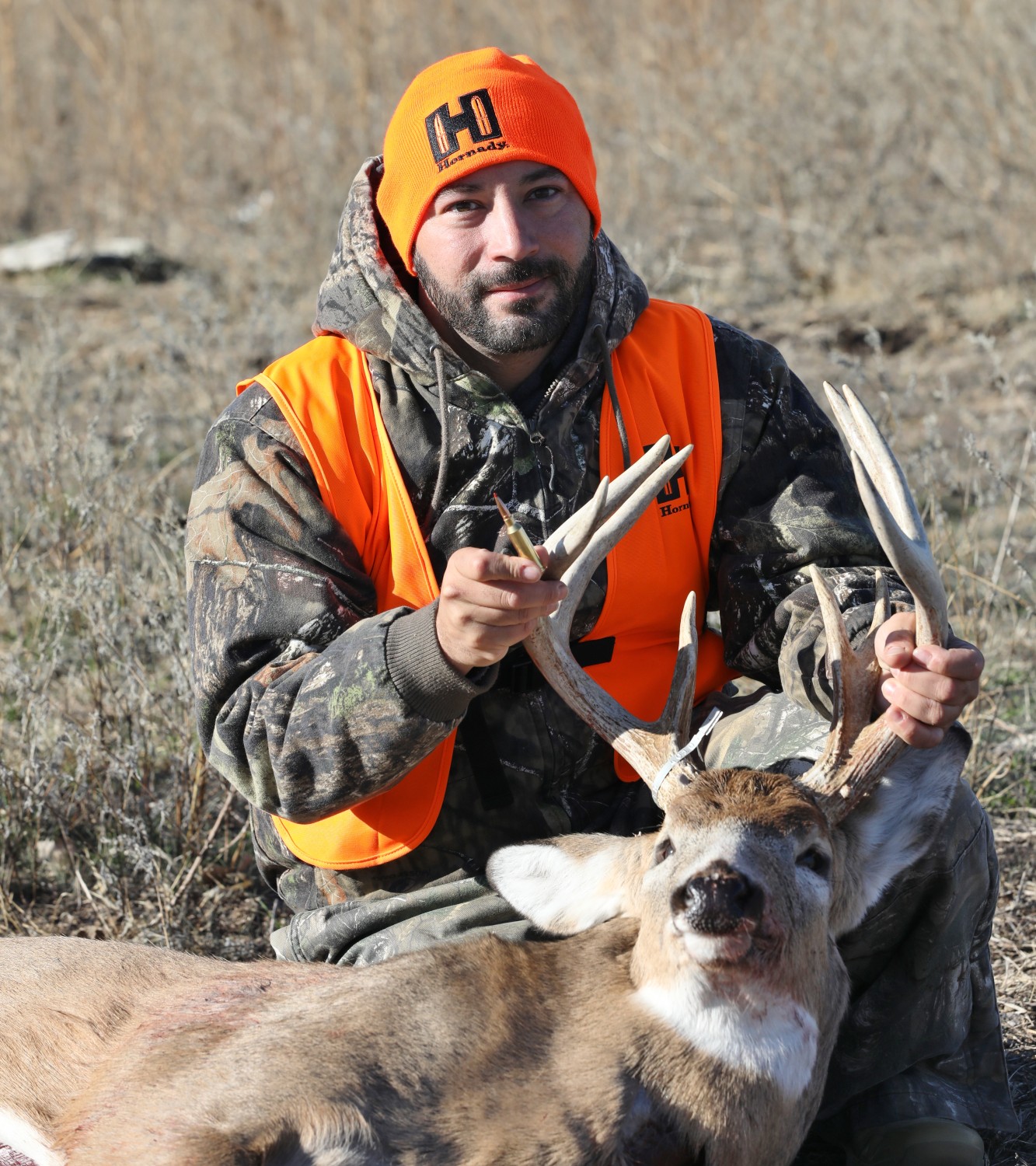
Frank also makes an important point that can get lost when people become heavily focused on performance: shooting should still be enjoyable.
His own interests span rifles, pistols, precision shooting, competition, hunting, muzzleloaders, and other disciplines. Not every shooter needs to specialize in one narrow category.
Exploring different disciplines can expose you to new skills and new ways of solving problems. It can also help keep training interesting enough that you continue doing it.
Improvement matters, but consistency is easier to maintain when you enjoy the process.
Watch the Full Conversation
Frank and Terry cover far more than equipment or shooting technique in this episode. Their conversation explores what it means to remain a student after years of experience, how competition can expose overlooked weaknesses, why accurate equipment helps diagnose shooter error, and how to make limited training time more productive.
If you are trying to become a more capable shooter without automatically assuming the answer is another piece of equipment, watch the episode above or listen to the full conversation through one of the podcast platforms below.
Follow Frank Melloni and Renaissance Firearms Instruction for more training, instruction, and firearms content:
- Website: Renaissance Firearms Instruction
- Instagram: Renaissance Firearms Instruction on Instagram
- Facebook: Renaissance Firearms Instruction on Facebook
- Muck Rack: Frank Melloni on Muck Rack
Subscribe to the Laser Ammo YouTube channel for more episodes of Making Shooters Better and more conversations focused on safe, responsible training, practical skill development, and helping shooters train with greater purpose.
Listen to More Episodes
You can listen to Making Shooters Better on your favorite podcast platform. Follow the show here:
- Buzzsprout: https://www.buzzsprout.com/2532363/follow
- Amazon Music https://music.amazon.com/podcasts/8156b69d-5ad9-46e9-9a4d-2baff1fbc9ef/making-shooters-better
- Apple Podcasts: https://podcasts.apple.com/podcast/id1849466402
- Spotify: https://open.spotify.com/show/5EhHThJEeV5QZ0QQn5n5CF
- Podcast Index: https://podcastindex.org/podcast/7559749
- Overcast: https://overcast.fm/itunes1849466402
- Castro: https://castro.fm/itunes/1849466402
- Podchaser: https://www.podchaser.com/podcasts/making-shooters-better-6264190
- Goodpods: https://www.goodpods.com/podcasts-aid/1849466402
- TrueFans: https://truefans.fm/65cb6a8a-c2eb-524e-b742-257cbe7bcfce
- Castbox: https://castbox.fm/vic/1849466402
- Podcast Addict: https://podcastaddict.com/podcast/making-shooters-better/6158896
- iHeartRadio: https://www.iheart.com/podcast/1333-making-shooters-better-303769503/
- Pandora: https://www.pandora.com/podcast
- TuneIn: https://tunein.com/podcasts/