



 Update
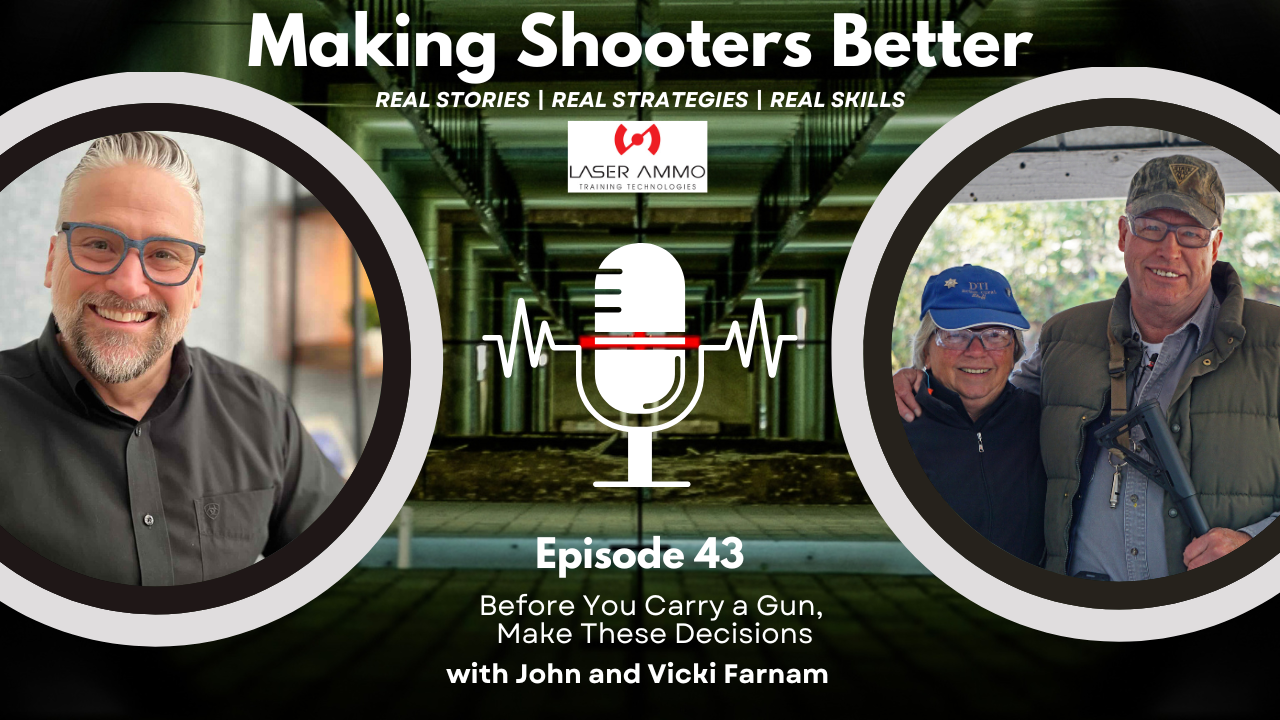
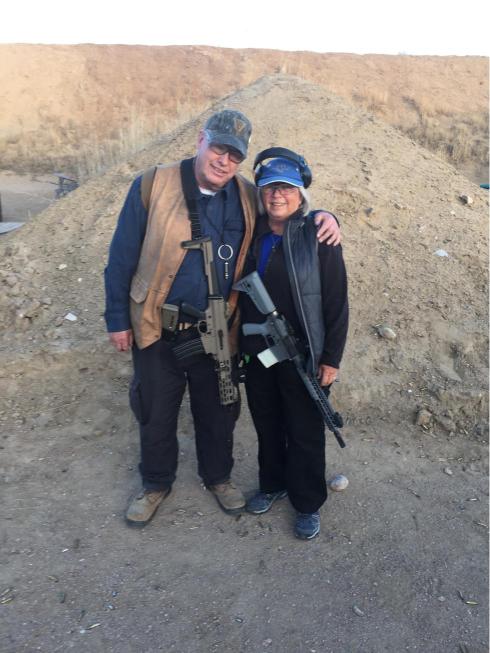
Knowing how to shoot is an important skill. But John and Vicki Farnam believe genuine preparedness begins much earlier.
In this episode of Making Shooters Better, host Terry Vaughan sits down with two longtime defensive firearms instructors to explore the decisions, habits, observations, and personal responsibilities that surround armed self-defense.
The conversation moves well beyond mechanics. John and Vicki discuss avoiding unnecessary confrontations, learning to notice what is happening around you, adapting instruction to the individual student, preparing for stressful decisions, and understanding that successful defensive training does not always end with someone using a firearm.
Preparedness Is Bigger Than the Firearm
One of the first ideas John and Vicki challenge is the assumption that carrying a firearm automatically makes someone prepared.
Vicki describes preparedness as something that reaches into ordinary life. It includes paying attention, making practical choices, recognizing changing conditions, and taking reasonable steps to look after yourself before a problem develops.
John approaches the same subject from another direction: learning to operate a firearm is only one component of a much larger set of skills and responsibilities.
Training the Whole Decision Process
For a defensive firearm owner, technical proficiency matters. So do the decisions surrounding it.
Throughout the episode, John and Vicki return to several areas shooters should consider alongside marksmanship:
- Recognizing situations that may be developing in the wrong direction
- Avoiding unnecessary exposure to predictable problems
- Communicating without escalating an encounter
- Understanding the responsibilities that accompany carrying a firearm
- Rehearsing responses instead of assuming they will appear automatically under pressure
- Continuing to improve judgment along with physical shooting skills
That broader perspective is particularly important because a defensive incident is not a controlled range exercise. Decisions may have to be made quickly, under pressure, and with imperfect information.
Avoidance Is a Skill Worth Practicing
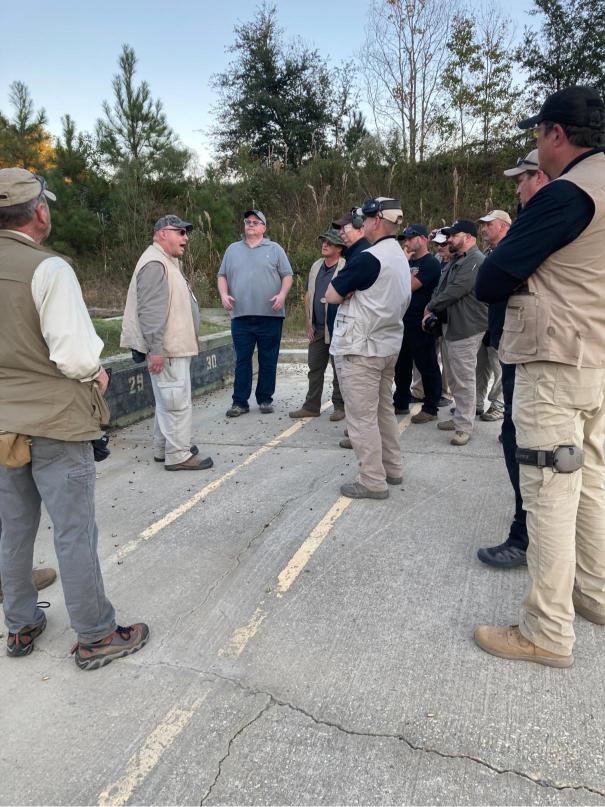
John places significant emphasis on avoiding confrontations whenever reasonably possible.
That may mean leaving an uncomfortable environment, choosing not to engage with someone who is looking for an argument, reconsidering where you go and when, or simply recognizing that proving a point is rarely worth turning a minor encounter into a larger problem.
The goal is not to eliminate every risk. That is impossible. Instead, it is to develop judgment that helps prevent avoidable situations from becoming defensive emergencies.
John explains that some of the student stories he finds most rewarding are not stories about surviving shootings. They are stories from people who changed their plans, kept quiet instead of escalating an argument, reconsidered the company they were keeping, or decided not to enter a questionable situation in the first place.
Those decisions may never look dramatic, but they can represent exactly what responsible defensive training is supposed to accomplish.
Learning to Actually Observe
Vicki argues that recognizing danger begins with something even more fundamental: learning to see what is happening around you.
Simply telling a student to “pay attention” is not enough. Observation itself can be practiced.
She describes exercises that ask students to notice specific details while traveling to a range. Over time, students begin recognizing environmental conditions, vehicles, animals, changes in surroundings, and other information that previously passed unnoticed.
The value extends far beyond looking for threats.
Good observation helps people recognize when something is different, when circumstances are changing, and when it may be time to make a different decision.
Awareness Does Not Have to Mean Paranoia
Terry and the Farnams also discuss an important question: how can someone become more attentive without becoming fearful of everything around them?
The answer is balance.
Responsible awareness is not about treating every person or every environment as a threat. It is about developing enough attention to recognize meaningful changes and then choosing an appropriate response.
For many students, improving that awareness gradually can make it a normal part of everyday life rather than something exhausting or fear-driven.
The Decision Before the Trigger Press
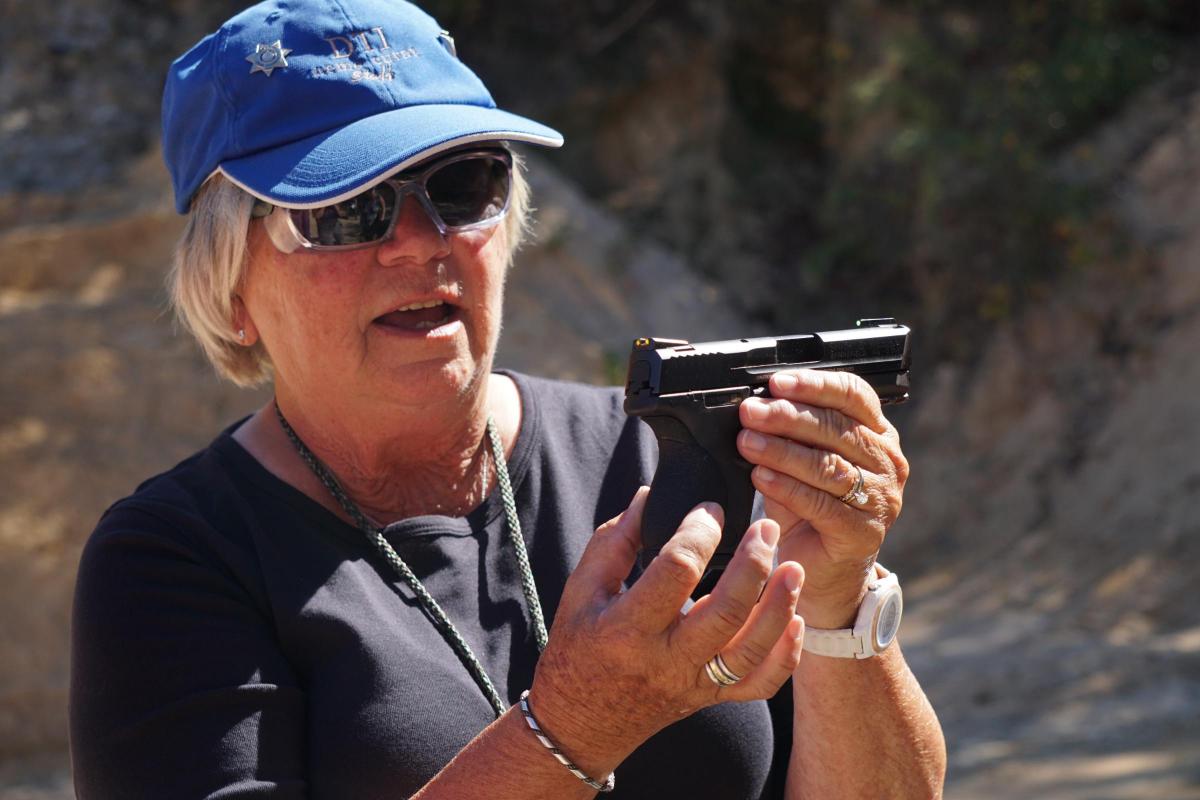
One of the most important moments in the conversation comes when Vicki discusses something firearms training cannot completely reproduce: the instant when a person must genuinely decide whether action is necessary.
Training can rehearse skills. It can introduce scenarios. It can require students to communicate and make choices. But an instructor cannot perfectly recreate every physical and psychological element of a real emergency.
That makes preparation before the emergency even more important.
Force, Violence, and Personal Responsibility
Vicki also talks about helping students think carefully about the language surrounding self-defense.
She distinguishes criminal violence from the appropriate use of force to stop violence. For some students, that distinction helps clarify that defending yourself does not require adopting the mindset or intentions of an aggressor.
Before getting there, however, she asks an even more personal question: does the student believe his or her own life is worth protecting?
Some students readily imagine protecting children, spouses, or other people but hesitate when considering themselves. Vicki believes responsible training needs to address that hesitation rather than treating shooting as a purely mechanical exercise.
What a 700-Pound Hog Taught Vicki About Training
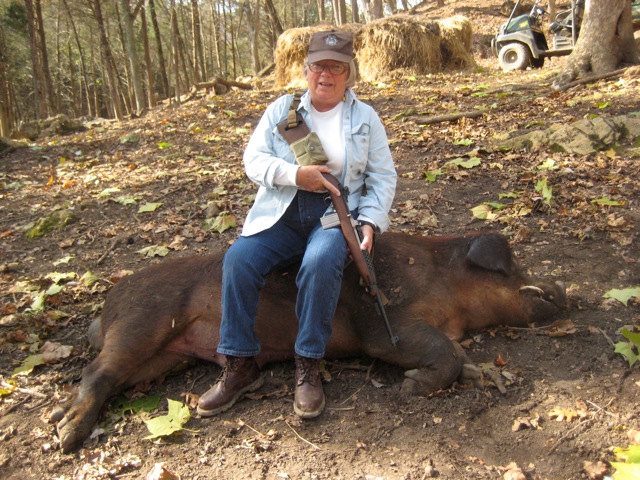
Vicki's story about a charging wild hog brings many of these ideas together.
The animal weighed roughly 700 pounds and continued closing the distance until the shot she ultimately needed to take occurred at approximately three feet, yep 3'.
Glare initially prevented her from seeing the sights clearly. She continued responding to what was actually happening until the angle changed, the sight picture became available, and the decision had to be made.
What struck her afterward was her own composure.
She had practiced the necessary skills repeatedly. When circumstances finally required them, training gave her something familiar to rely on during an unfamiliar and dangerous event.
It is a powerful example of why repetition matters. Training cannot duplicate every emergency, but it can make important processes less foreign when pressure rises.
Good Instructors Teach the Student in Front of Them
The second half of the conversation moves into another area where John and Vicki have spent decades working: how firearms instruction itself can improve.
Vicki describes experiences with instructors who were successful teaching one group of students but struggled with another. Her central point is that repeating the same words does not guarantee that every student receives the same information.
Communication Matters as Much as Demonstration
A student may need additional context, a different visual explanation, or a clearer description of how several individual actions fit together.
Vicki uses sight alignment as an example. An instructor may assume the relationship between the shooter's eye, rear sight, front sight, and target is already obvious. If it is not, repeatedly telling the student to watch the front sight may never address the actual misunderstanding.
For instructors, that creates an important responsibility:
- Identify what the student is actually misunderstanding
- Explain the “why” when it improves comprehension
- Use visual and verbal teaching methods when appropriate
- Avoid assuming something is obvious simply because it is obvious to the instructor
- Adapt communication instead of blaming the student when a teaching method is not working
Instruction Has to Keep Evolving
John makes a related point about technique itself.
Firearms instruction has changed substantially during his career. Methods once treated as standard have been replaced or refined as instructors gain experience and the training community learns more.
That means both students and instructors need enough flexibility to reconsider familiar habits.
Experience is valuable, but experience should not become an excuse to stop learning.
Watch the Full Conversation
This episode offers much more than a discussion of shooting technique. John and Vicki Farnam examine what happens before, during, and around defensive firearms training: how people observe, how they communicate, how they decide what risks are worth taking, how instructors connect with different students, and why walking away can sometimes demonstrate more skill than winning a confrontation.
Watch the full episode of Making Shooters Better to hear the Farnams expand on decades of teaching experience, Vicki's unforgettable encounter with a charging hog, and the practical philosophy they want students to carry with them long after class ends.
To learn more about John and Vicki Farnam, their courses, and Defense Training International, visit https://defense-training.com/ and https://dtiwomen.com/.
Subscribe to Laser Ammo's channel for more Making Shooters Better conversations with instructors, competitors, professionals, and experts focused on responsible firearms training and continuous skill development.
Listen to More Episodes
You can listen to Making Shooters Better on your favorite podcast platform. Follow the show here:
- Buzzsprout: https://www.buzzsprout.com/2532363/follow
- Amazon Music https://music.amazon.com/podcasts/8156b69d-5ad9-46e9-9a4d-2baff1fbc9ef/making-shooters-better
- Apple Podcasts: https://podcasts.apple.com/podcast/id1849466402
- Spotify: https://open.spotify.com/show/5EhHThJEeV5QZ0QQn5n5CF
- Podcast Index: https://podcastindex.org/podcast/7559749
- Overcast: https://overcast.fm/itunes1849466402
- Castro: https://castro.fm/itunes/1849466402
- Podchaser: https://www.podchaser.com/podcasts/making-shooters-better-6264190
- Goodpods: https://www.goodpods.com/podcasts-aid/1849466402
- TrueFans: https://truefans.fm/65cb6a8a-c2eb-524e-b742-257cbe7bcfce
- Castbox: https://castbox.fm/vic/1849466402
- Podcast Addict: https://podcastaddict.com/podcast/making-shooters-better/6158896
- iHeartRadio: https://www.iheart.com/podcast/1333-making-shooters-better-303769503/
- Pandora: https://www.pandora.com/podcast
- TuneIn: https://tunein.com/podcasts/